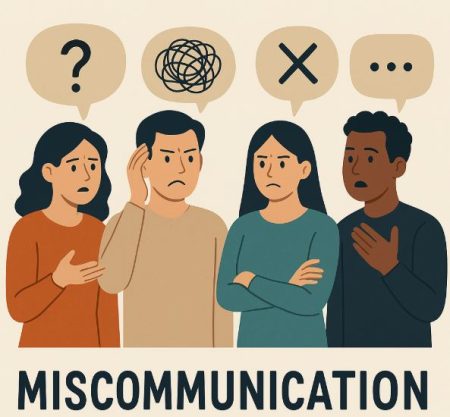
Effective communication is the process of exchanging information in a clear, concise, and purposeful manner, ensuring that the intended message is accurately received and understood by the recipient. It is an essential skill that plays a crucial role in personal, professional, and social interactions. Effective communication involves not just the delivery of the message but also active listening, empathy, and understanding between the sender and receiver. It goes beyond simply talking or writing; it includes interpreting non-verbal cues, such as body language, tone of voice, and facial expressions, which all contribute to the overall meaning of the message.
In the workplace, effective communication fosters collaboration improves teamwork and enhances productivity by ensuring that everyone is on the same page. It helps prevent misunderstandings, resolves conflicts and facilitates decision-making. Similarly, in personal relationships, effective communication builds trust, strengthens connections, and allows individuals to express their needs and emotions openly. In educational settings, it aids in the transfer of knowledge, encourages student engagement, and promotes a deeper understanding of the material being taught.
However, effective communication requires practice and continuous improvement. Factors such as emotional intelligence, cultural awareness, and the ability to adapt communication styles to different contexts and audiences are key to becoming a more effective communicator. By developing these skills, individuals can ensure that their messages are conveyed clearly, that misunderstandings are minimized, and that relationships are strengthened through thoughtful and purposeful communication.
Common Barriers to Effective Communication
Effective communication is essential for building strong relationships, enhancing collaboration, and ensuring the smooth flow of information in both personal and professional settings. However, there are several barriers that can hinder communication, making it difficult for the sender and receiver to exchange ideas clearly and efficiently. These barriers can lead to misunderstandings, confusion, and conflict, ultimately impacting productivity and relationships. Understanding the common barriers to effective communication is the first step in overcoming them. Below are some of the most common barriers to communication and how they can be addressed.
- Physical Barriers: Physical barriers refer to environmental factors that obstruct the communication process. These include noise, poor lighting, distance, and technical difficulties, all of which can interfere with the clarity of the message being conveyed. For example, trying to communicate in a noisy office or across a long distance during a phone call can make it difficult for both parties to hear and understand each other. Additionally, technical issues such as poor internet connection or malfunctioning equipment in virtual meetings can disrupt communication.
Solution: To overcome physical barriers, it’s important to choose a suitable environment for communication. In face-to-face interactions, a quiet and comfortable setting can enhance clarity. In remote communications, ensuring that the technical setup (e.g., internet, microphones, or video cameras) is functioning properly can reduce the likelihood of disruptions. - Language Barriers: Language differences are a significant barrier to effective communication, especially in multicultural or international settings. This barrier includes not only different languages but also the use of jargon, slang, or technical terms that the other person may not understand. For instance, an employee from one department may use industry-specific terms that a colleague from another department finds confusing. Similarly, when communicating in a second language, individuals might struggle with vocabulary, grammar, or accent differences, leading to misinterpretation.
Solution: To overcome language barriers, it’s important to use simple and clear language, avoid jargon unless it’s understood by the audience, and provide translations or explanations when necessary. In international settings, being aware of cultural differences and ensuring that everyone understands the language used is crucial. For example, offering written materials alongside spoken communication can help reinforce the message. - Emotional Barriers: Emotions play a significant role in communication. Strong emotions such as anger, frustration, or anxiety can affect how a person communicates and how a message is received. For instance, a person who is upset may express their thoughts more harshly or become defensive, making it difficult to engage in a constructive conversation. Similarly, a listener who is emotionally overwhelmed may misinterpret or dismiss the message entirely.
Solution: To overcome emotional barriers, both the speaker and the listener must be aware of their emotional state. Practicing emotional regulation, such as taking a deep breath before responding or stepping away to cool down, can help maintain a calm and productive conversation. Additionally, practicing empathy—actively listening and acknowledging the other person’s feelings—can help reduce emotional tensions and facilitate more effective communication. - Cultural Barriers: Cultural differences can significantly affect communication, especially in diverse work environments or when interacting with individuals from different countries. Differences in communication styles, values, norms, and behaviors can create misunderstandings. For example, in some cultures, direct communication is preferred, while in others, indirect communication is more common. In some cultures, silence may be seen as respectful, while in others, it may be perceived as a lack of interest or engagement.
Solution: Overcoming cultural barriers requires cultural awareness and sensitivity. Educating oneself about the cultural backgrounds and communication styles of others can help prevent misunderstandings. Additionally, being open-minded, respectful, and willing to adapt communication styles based on cultural norms can foster smoother interactions. For instance, in cross-cultural meetings, it may be helpful to clarify any points of potential misunderstanding and encourage open dialogue. - Perceptual Barriers: Perceptual barriers occur when individuals interpret messages based on their personal experiences, biases, or assumptions rather than understanding the message as intended. These barriers can lead to distorted communication. For example, if a person is tired or stressed, they may perceive neutral or constructive feedback as criticism. Similarly, preconceived notions about a person’s intentions or background can influence how their message is interpreted.
Solution: To address perceptual barriers, individuals must practice active listening and remain open to different perspectives. Asking clarifying questions and seeking feedback can help ensure that the message is interpreted correctly. Additionally, being aware of one’s own biases and making an effort to approach communication objectively can reduce the impact of perceptual barriers. - Information Overload: Information overload occurs when an individual is bombarded with too much information at once, making it difficult to process or prioritize important details. In today’s fast-paced world, people are often overwhelmed by emails, notifications, meetings, and messages, which can lead to decreased productivity and a lack of focus. For example, a team member may struggle to keep track of multiple project updates sent through numerous communication channels, leading to confusion and missed deadlines.
Solution: To overcome information overload, it’s essential to filter and prioritize information. Breaking down complex information into manageable pieces and presenting it in a clear and concise manner can help recipients absorb the message more effectively. Additionally, using tools such as project management software or clear scheduling of meetings can help organize and streamline communication. - Lack of Feedback: Feedback is an integral part of the communication process, as it allows the sender to gauge whether the message was understood. A lack of feedback can lead to uncertainty, as the sender does not know if the receiver has comprehended the message or requires further clarification. For example, during a meeting, if the presenter does not ask for feedback or gauge the understanding of the audience, there may be gaps in communication that go unnoticed.
Solution: To overcome this barrier, it’s important to encourage feedback at every stage of communication. This can include asking follow-up questions, requesting clarification, or encouraging the receiver to summarize the key points. This allows the sender to ensure that the message is being understood correctly and provides an opportunity to address any confusion. - Lack of Listening: Perhaps one of the most significant barriers to effective communication is poor listening. When individuals focus more on formulating their responses rather than actively listening to the speaker, important details are often missed. For example, in a workplace discussion, a manager who doesn’t listen attentively may overlook key concerns raised by employees, leading to unresolved issues and misunderstandings.
Solution: To address this barrier, individuals must practice active listening—focusing entirely on the speaker, avoiding interruptions, and providing feedback to show that they are engaged. Active listening techniques, such as paraphrasing and asking clarifying questions, can improve understanding and ensure that the communication process is effective.
Effective communication is essential for success in both personal and professional relationships, but several barriers can hinder its effectiveness. Physical, language, emotional, cultural, and perceptual barriers, along with information overload, lack of feedback, and poor listening, can all impede clear communication. By being aware of these barriers and actively working to overcome them, individuals can improve their communication skills, foster stronger relationships, and create a more collaborative environment. Understanding and addressing these obstacles is key to ensuring that messages are delivered and received accurately.
Acknowledgements:
- Bose, S., & Singh, V. K. (2008). Barriers to effective communication in developing world intensive care units. Critical Care Medicine, 36(10), 2961. https://doi.org/10.1097/CCM.0b013e31818728af
- Button, K., & Rossera, F. (1990). Barriers to communication. The Annals of Regional Science, 24(4), 337–357. https://doi.org/10.1007/BF01580478
- Dabaj, F. (2011). Analysis of Communication Barriers to Distance Education A Review Study. Online Journal of Communication and Media Technologies, 1(1). https://arastirmax.com/en/publication/online-journal-communication-and-media-technologies/1/1/analysis-communication-barriers-distance-education-review-study/arid/cec9b589-5158-4d8b-8a93-3d14c4543d15
- Erven, B. L. (n.d.). OVERCOMING BARRIERS TO COMMUNICATION.
- Hills, L. (2014). Overcoming the Ten Most Common Barriers to Effective Team Communication.
- Kapur, D. R. (n.d.). Barriers to Effective Communication.
- Quill, T. E. (1995). Barriers to Effective Communication. In M. Lipkin, S. M. Putnam, A. Lazare, J. G. Carroll, & R. M. Frankel (Eds.), The Medical Interview: Clinical Care, Education, and Research (pp. 110–121). Springer. https://doi.org/10.1007/978-1-4612-2488-4_8