
Non-verbal communication is a form of communication that conveys messages without the use of words. It encompasses a wide range of non-verbal cues, including facial expressions,…
Non-verbal communication is a form of communication that conveys messages without the use of words. It encompasses a wide range of non-verbal cues, including facial expressions,…

Introduction: Information literacy is an essential skill set that empowers individuals to navigate the vast and ever-expanding realm of information with confidence and discernment. In an…
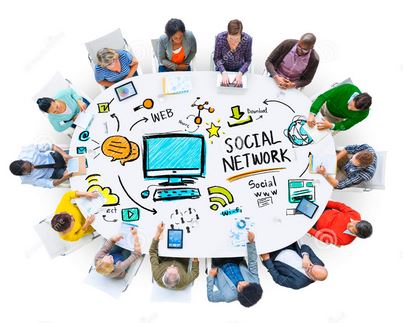
Social networking sites have emerged as powerful platforms that reshape how individuals connect, communicate, and share information in the digital era. These online communities, such as…

Introduction: A patent is a valuable legal protection a country grants to inventors or assignees, providing them exclusive rights to utilize and exploit their invention for…

1.1 Introduction: A thesaurus serves as a powerful tool in information organization and retrieval, functioning as a comprehensive representation of keywords related to specific subject areas.…

Intellectual Property Rights (IPR) refer to the legal protections granted to individuals, organizations, or institutions for their creations of the mind, such as inventions, literary and…
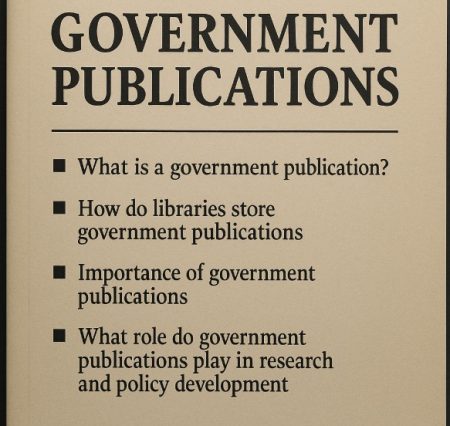
Government publications are official documents produced or commissioned by government agencies and institutions at local, regional, national, or international levels. These publications encompass a wide range…

Social advertisement refers to a form of communication that aims to inform, educate, or persuade the public on various social, environmental, or health-related issues. Unlike traditional…
Selective Dissemination of Information (SDI) services are an essential function in modern libraries, designed to meet the specific information needs of users by providing targeted and…

1.1 What is Barcode? A barcode is a visual representation of data that consists of a series of parallel lines or spaces of different widths. It…